

By Brayden Hattier
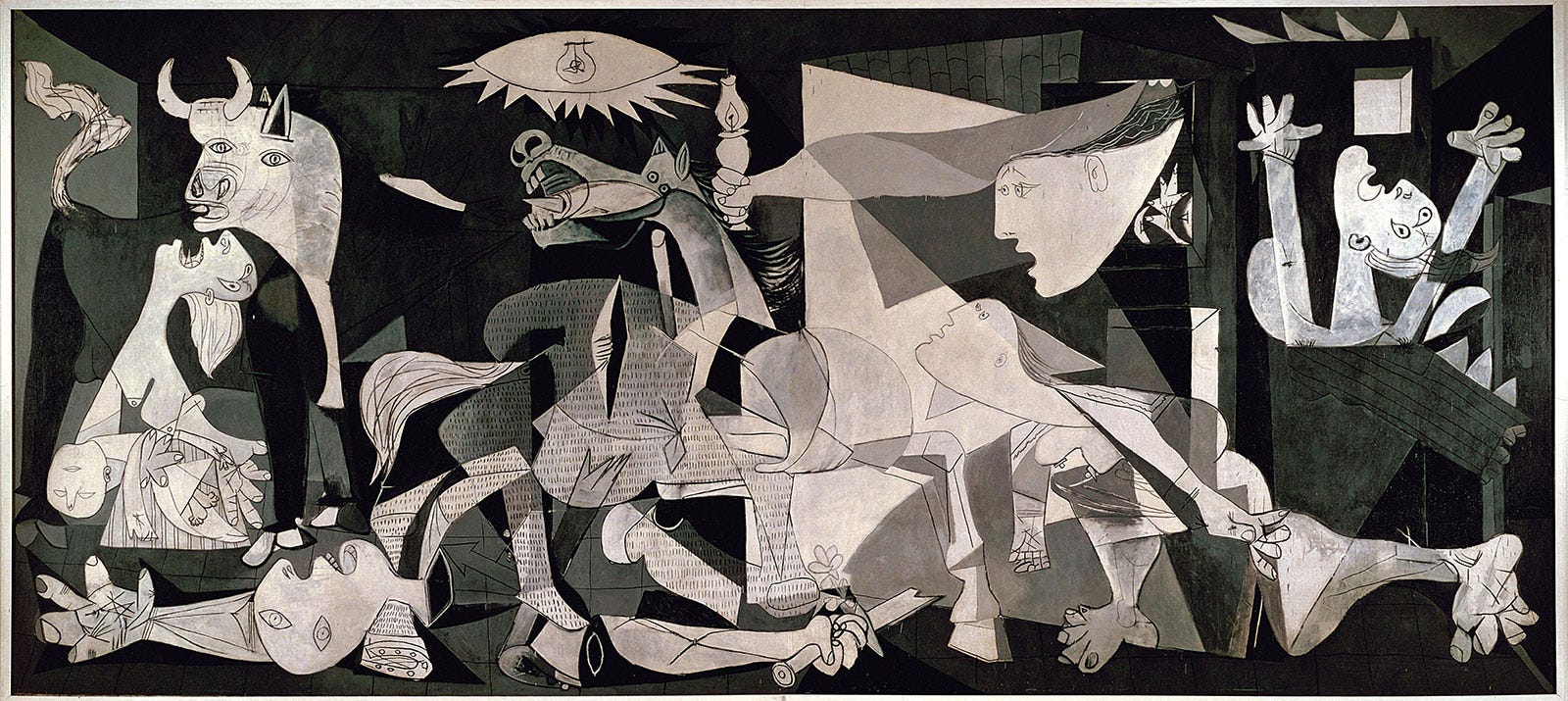
Pablo Ruiz Picasso was born in Mágala, Spain, in the year 1881. Picasso was an artistic innovator at heart, influencing numerous new styles, such as his famous cubism. In his life, he created more than 50,000 works in various forms, including paintings, drawings, and sculptures. Although he made a great number of pieces, the artist’s painting Guernica is widely regarded as his most genius work as well as an extremely powerful political statement. Picasso painted Guernica while living in Paris. He was immediately inspired to create this work after hearing about Nazi Germany’s two-hour bombing of the city Guernica, Spain on April 26, 1937. This painting broke Picasso’s political silence, as he took a firm anti-war stance in creating it. Although he seldom let others view his painting process, Picasso allowed visitors to view his progress on this piece, as he believed this publicity would strengthen the antifascist cause. After 35 days of work, the painting was completed on June 4th, 1937. This masterful work was initially exhibited at the Spanish pavilion at the Paris International Exposition in 1937 and later became a touring piece at various venues around the world.
The touring exhibition was used to raise money for Spanish war relief, and the painting helped draw significant attention worldwide to the Spanish Civil War. The structure of Guernica is similar to that of a tryptic and features many symbols in each part, one of the most famous being the light bulb, which represents the bomb.
Since Picasso was a classically trained artist, many of these symbols reference other widely loved pieces of art. The mother with her dead child is a reference to La Pietà, a masterful sculpture by the famous Michelangelo. The person who can be seen throwing their arms up and screaming references the painting The Third of May 1808 in Madrid by painter Francisco Goya. These references, alongside others, show how art influences art, and how the universal feelings of fear and loss can be portrayed in an endless number of forms. Guernica does not only relate to the Spanish Civil War, but it acts as a symbol of the violence and pain experienced around the world. It is an emotional and stylistic masterpiece that will forever stand out in the art world for its intricate design and genius methods of evoking emotion in the viewer.
Originally published in The Blue Jay, issue 100.1, on November 12, 2026. This issue covers the first quarter of the 2026–2027 school year.